The Bass VI, recently resurrected in hot-rodded form by Fender and in its classic form by Squier, is a six-string bass guitar. It was designed and offered as a special kind of bass guitar during its original run from 1961 to 1975, and it is designed and offered as such today. It is not a baritone guitar.
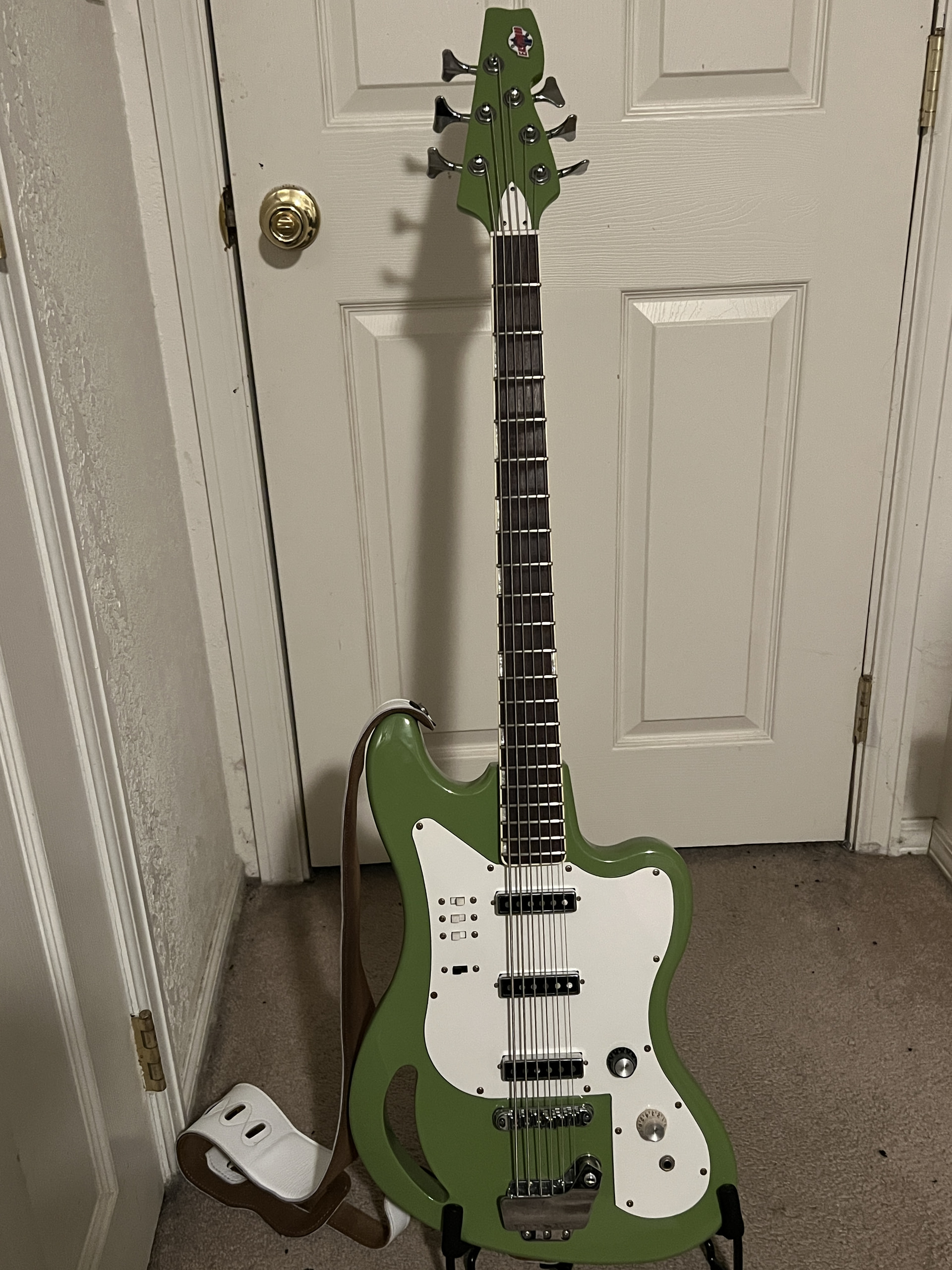
I’m doing the course on an Eastwood TB64, a reproduction of a 1960’s Teisco bass VI. I took the trem off for now. I’ll put it back on when I’m done with the course.
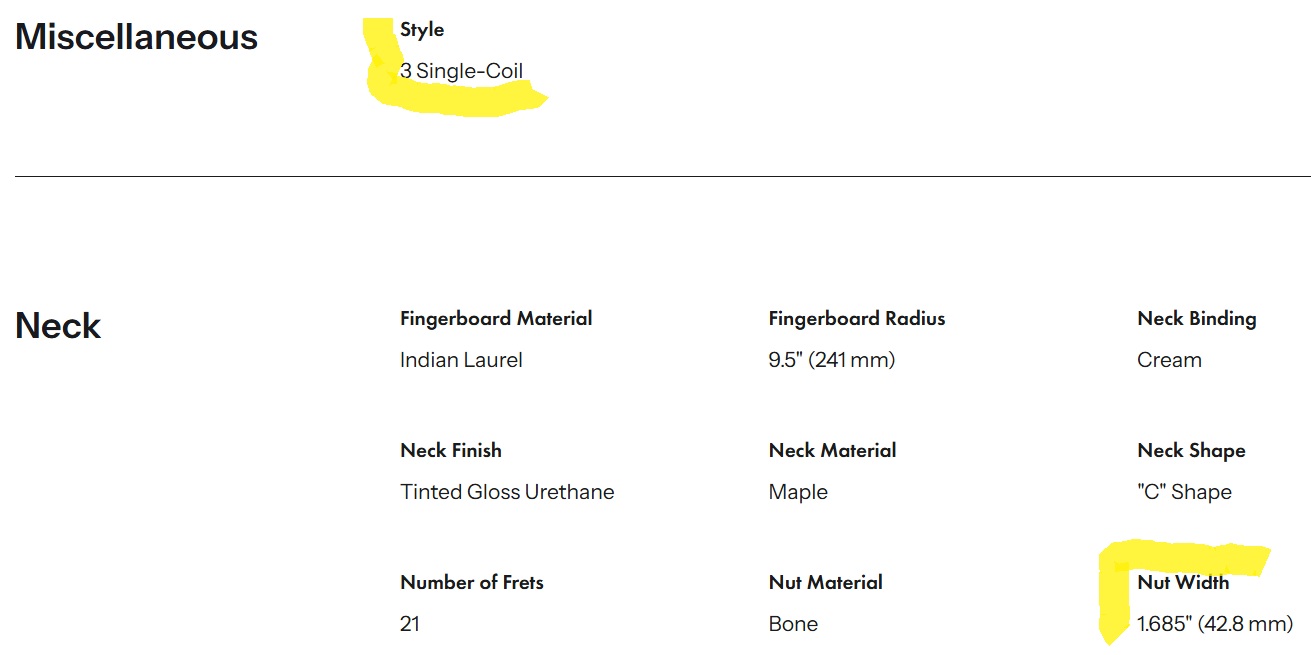
It depends on the VI whether it’s more guitar than bass. This one is a guitar. It’s 1.68 at the nut and has single coil PUs voiced for a guitar. I was between the TB and the Hooky pro 6. The Hooky pro 6 is 2" with 13mm string spacing and is voiced to be an E - E bass. Ultimately, I wanted a guitar with bass strings, so I went with the TB. The Fender / Squier VI and Schecter Hellcat / Ultracure VI are the same way.
The trick with these seem to be frequency filtering. They can sound like mud, especially playing chords above the D string. I set mine up to filter out anything below 200hz, that’s the bass’s job.
One of my favorite parts of Bruce Springsteen’s book is when he gets his first electric guitar, he doesn’t realize it’s a Gibson six-string electric bass until one of his friend compliments him on his ingenuity and the unique sound.
Mine with the low b string is a muddy mess on chords. Also has single coils.
I’m not sure there’s a hard and fast rule, but my understanding is if it’s tuned to low e then it’s a bass, if it’s tuned somewhere in between that and a guitar, with the guitar pattern of tuning (5th string is a semitone flat) it’s a baritone.
Part of the difference is scale length as well. Baritones are generally less than 30 inch scale.
Baritones are 6-string instruments usually tuned B, E, A, D, F#, B (with the 5th string E matching the 6th string E on a standard guitar), with a scale length of around 27″. The longer scale length keeps the low-tuned strings at the right tension, and also provides for a full, fat tone. Most baritones are electric, although there have been acoustic versions as well.
Longer necked baritones, such as those made by Danelectro, are up to 29", and a bit beyond lending themselves to tuning in A (fifth).
A Brief History of the Baritone Guitar
In 1956, Danelectro released the first mass-produced baritone guitar. Early on, it was adopted in surf and country-western music, especially among spaghetti western film scores. In the ‘80s, it would find favor among a new genre—hard rock and heavy metal. (Read more)